
In Memoriam: Professor Byron D. Tapley (1933–2026)
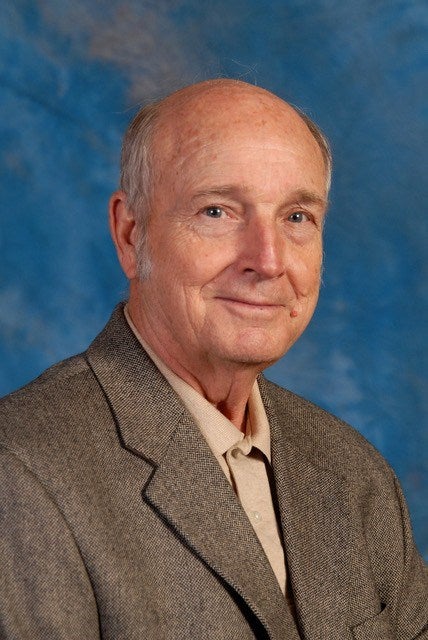 The University of Texas Center for Space Research and an international community mourn the passing of Professor Byron Dean Tapley, who died peacefully at his home in Austin, Texas, on 22 June 2026, at the age of 93, surrounded by his family.
Professor Tapley was a pioneer of modern space geodesy whose vision and leadership fundamentally transformed the way scientists observe the Earth from space. Over a distinguished career spanning more than six decades, he advanced satellite geodesy into a cornerstone of Earth system science, making lasting contributions to geodesy, oceanography, hydrology, and climate research.
A lifelong member of The University of Texas at Austin community, Prof. Tapley earned his B.S. in Mechanical Engineering in 1956 and his M.S. and Ph.D. in Engineering Mechanics in 1958 and 1960. He joined UT Austin Aerospace faculty as an Assistant Professor in 1960, was promoted to Associate Professor in 1964, to the title of Professor in 1968, endowed as W.R. Woolrich Professor from 1974-84, and thereafter as Claire Cockrell Williams Chair until his retirement. Serving as the Chair of the Department of Aerospace Engineering and Engineering Mechanics from 1966 to 1977, he established the University’s spaceflight program. He also promoted research through the Institute for Advanced Studies in Orbital Mechanics (IASOM), and in 1981 founded the world-renowned Center for Space Research (CSR), for which he served as Director until 2015. Over these decades, the Center grew as a home to a vibrant research community, spanning remote sensing, disaster analytics, space mission design, education and outreach, and numerous societal applications. He was a Fellow of the AGU, AIAA, and AAAS, and was inducted into the National Academy of Engineering in 1987. Since 2015, he remained an active member of the University community as the CSR Director Emeritus, and Claire Cockrell Williams Chair Emeritus in Engineering.
Professor Tapley made pioneering contributions to precise orbit determination, satellite laser ranging, and radar altimetry, helping establish these techniques as essential tools for studying the Earth’s shape, gravity field, ocean circulation, and sea level. He played an important role in advancing the international geodetic infrastructure through his leadership during the MERIT (Monitor Earth Rotation and Intercompare the Techniques) campaign, which helped establish modern terrestrial reference frames and operational Earth orientation measurements. His engagement with radar altimetry spanned three decades starting in early ‘80s, from NASA Seasat, TOPEX/Poseidon, and Jason missions, as well as the ESA ERS-1/2 missions. In this time, his research portfolio expanded from geodesy to Earth system science. Around the turn of the century, his leadership of the Interdisciplinary Sciences planted the seeds for the full flowering of geodetic contributions to the Earth System Sciences through the GRACE (Gravity Recovery and Climate Experiment) missions.
He is best known internationally as the Principal Investigator of the US/German GRACE mission. Under his leadership, GRACE became the first mission to measure time-variable gravity from space, opening an entirely new window on the dynamic Earth. Its observations revolutionized our understanding of changes in terrestrial water storage, groundwater depletion, ice-sheet and glacier mass loss, sea-level change, and other processes governing the global water cycle. The mission represented a paradigm shift in Earth observation and established satellite gravimetry as an indispensable component of modern geodesy and Earth system science.
Following the success of GRACE, Professor Tapley remained a tireless advocate for the continuity of satellite gravity observations through GRACE Follow-On (GRACE-FO) and future gravity missions. His scientific leadership fostered a vibrant international community whose collaborative work continues to expand the applications of satellite gravimetry for both scientific discovery and societal benefit.
Beyond his scientific accomplishments, Byron was an exceptional mentor, educator, and leader. He inspired generations of students and colleagues through his intellectual curiosity, generosity, humility, and unwavering commitment to scientific excellence. His influence is reflected not only in the discoveries his work enabled, but also in the many scientists around the world whose careers he helped shape.
Outside of science, Byron embraced life with the same spirit of curiosity and adventure that defined his professional career. He loved sailing, flying, hiking, rock climbing, snorkeling, and free diving, remaining active well into his nineties. He especially cherished time with his wife, Sophie, his family, and friends, whether watching the changing waters of Maui and Lake Travis, encouraging lively conversations, or challenging everyone to a game of his favorite dominoes, “42.” Those who knew him best remember not only his remarkable scientific achievements, but also his kindness, humility, generosity, and genuine interest in the lives of others.
Professor Byron Tapley leaves behind an extraordinary legacy. His pioneering vision transformed space geodesy and forever changed our ability to monitor the changing Earth from space. His contributions will continue to benefit science and society for generations to come, and he will be remembered with deep respect and gratitude by the international science community.